
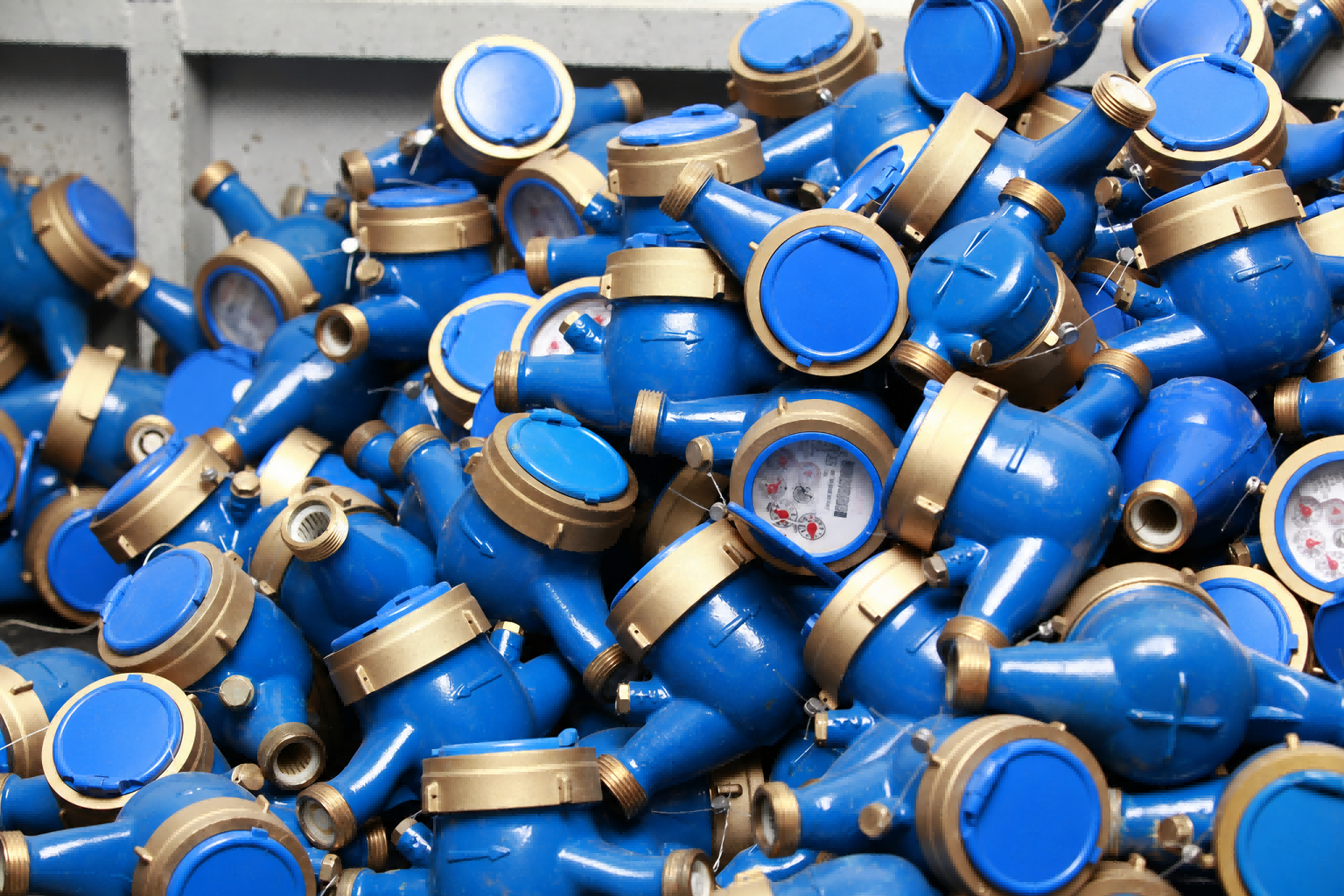
How Much Does a Water Meter Cost? A Guide for Utilities and Distributors
The cost of a water meter depends on more than the price of the device itself. Metering technology, communication options, accuracy requirements, order quantity, installation conditions, and software integration all influence the final investment.
For water utilities and distributors planning a water meter project, understanding these cost factors is essential to selecting the right solution and managing long-term operating expenses.
This guide explains what determines water meter prices, how different technologies affect costs, and what buyers should consider when comparing quotations from manufacturers.
1. How Much Does a Water Meter Cost?
There is no single standard price for a water meter.
A residential meter with basic remote reading capabilities will have a different cost structure from a high-accuracy ultrasonic water meter integrated into an Advanced Metering Infrastructure (AMI) system.
For utility-scale procurement, prices are typically determined by project-specific requirements rather than a universal retail price.
The following table outlines the main types of water metering products and their cost considerations.
| Meter Type / Configuration | Main Cost Considerations |
|---|---|
| Mechanical Water Meter | Meter body, measurement mechanism, accuracy class |
| Ultrasonic Water Meter | Ultrasonic sensors, electronics, accuracy, additional functions |
| NB-IoT Smart Water Meter | Communication module, cellular connectivity, network service, battery life |
| LoRaWAN Smart Water Meter | Communication module, gateways, network infrastructure, maintenance |
| Prepaid Smart Water Meter | Valve control, payment integration, software functionality |
| Remote Reading Retrofit Module | Module compatibility, installation, communication technology |
Note: These categories are not mutually exclusive. A smart water meter may combine ultrasonic measurement, NB-IoT or LoRaWAN communication, and prepaid functionality. The final cost depends on the selected configuration.
For bulk orders, the most reliable way to determine water meter cost is to request a quotation based on meter specifications, communication requirements, and project volume.
2. What Factors Affect Water Meter Prices?
Metering Technology: Mechanical vs. Ultrasonic
Metering technology is one of the primary factors affecting the initial purchase price.
Mechanical water meters use moving components to measure water flow. They are widely used in conventional metering applications and can be combined with communication modules for remote reading.
Ultrasonic water meters use ultrasonic signals to measure water flow without moving measuring parts. They can support high measurement sensitivity and advanced digital functionality, depending on the model.
Although ultrasonic meters may involve higher initial hardware costs, their measurement characteristics and maintenance requirements can make them attractive for long-term smart metering projects.
When comparing mechanical and ultrasonic water meter prices, utilities should consider:
- Required measurement accuracy and flow range
- Expected service life
- Maintenance requirements
- Installation conditions
- Remote reading capabilities
- Total cost of ownership
The lowest initial meter price does not necessarily represent the lowest long-term cost.
Communication Technology
Connectivity is another major factor influencing smart water meter pricing.
Common technologies include NB-IoT, LoRaWAN, LTE Cat.1, and radio-frequency communication systems.
Each has different infrastructure and operating cost implications.
| Technology | Infrastructure Considerations | Potential Ongoing Costs |
|---|---|---|
| NB-IoT | Requires compatible cellular network coverage | Cellular connectivity and data subscription fees |
| LoRaWAN | Uses public LoRaWAN networks or privately deployed gateways | Network service fees or gateway maintenance and management |
| LTE Cat.1 | Requires compatible LTE network coverage | SIM/eSIM connectivity and data service fees |
| Proprietary RF / RF Mesh | May require dedicated gateways, concentrators, or base stations | Network operation, equipment maintenance, and management |
For example, NB-IoT can reduce the need to build a private communication network where suitable cellular coverage already exists. However, recurring connectivity charges must be included in the project budget.
LoRaWAN may offer a different cost structure, particularly for utilities operating their own network infrastructure.
The most economical option depends on deployment density, network availability, reading frequency, terrain, and long-term operating requirements.
Meter Size and Accuracy Requirements
Smart water meter prices also vary by nominal diameter and measurement specifications.
A residential DN15 or DN20 meter generally has different hardware and production requirements from larger commercial or industrial meters.
Accuracy requirements also influence product selection.
For example, buyers may compare meters with different metrological ratios, such as R250 and R400, depending on the application.
When requesting a quotation, specify:
- Nominal diameter (DN)
- Required flow range
- Metrological ratio (R value)
- Maximum operating pressure
- Installation orientation
- Applicable metrological standards
Clear technical specifications help manufacturers provide more accurate and comparable quotations.
Battery Life and Environmental Protection
Smart water meters are often expected to operate for years with limited maintenance.
Battery capacity, power management, communication frequency, and environmental protection can all influence manufacturing costs.
A meter designed for underground installation with IP68 protection may have different enclosure and sealing requirements from a meter intended for a protected indoor environment.
Buyers should also verify the assumptions behind any advertised battery life.
A quoted battery lifetime may depend on network conditions, transmission frequency, ambient temperature, and enabled functions.
3. Does Buying Water Meters in Bulk Reduce Costs?
For distributors and water utilities, order quantity is an important pricing consideration.
Bulk smart water meter pricing may differ significantly from small-volume or sample orders because manufacturing, material procurement, testing, and logistics can be planned around larger quantities.
However, volume discounts are not always linear.
Several factors affect the final quotation:
Order quantity: Larger orders may provide opportunities for more efficient production and component purchasing.
Product customization: Special communication protocols, branding, firmware, or mechanical configurations may increase engineering and production costs.
Certification requirements: Projects requiring specific national approvals or additional testing may involve extra expenses.
Delivery schedule: Phased deliveries and urgent orders may have different cost implications.
Warranty and service requirements: Extended warranty periods, spare parts, and on-site technical support can affect contract pricing.
For large-scale projects, utilities should request a detailed quotation that separates meter hardware, communication infrastructure, software, logistics, and support services.
This makes it easier to compare different manufacturers on a consistent basis.
4. Water Meter Installation Costs: What Should Utilities Budget For?
The purchase price is only one part of a water metering deployment.
Installation costs vary depending on whether meters are being installed in new developments or replacing existing devices.
Key considerations include:
- Labor and meter replacement
- Pipe fittings and installation accessories
- Accessibility of existing meter locations
- Communication network coverage
- Gateway or concentrator installation
- Meter commissioning
- Data platform integration
- Staff training
For example, replacing meters in accessible residential installations may involve a different cost structure from upgrading meters in underground chambers or geographically dispersed service areas.
Utilities should conduct a site assessment before finalizing a project budget.
5. Understanding the Total Cost of Ownership (TCO)
For water utilities, the most important financial question is often not:
How much does one water meter cost?
It is:
How much will the complete metering system cost over its operating life?
Total Cost of Ownership (TCO) includes the initial investment and the expenses required to operate and maintain the system.
A simplified calculation is:
TCO = Meter Hardware + Installation + Communication Infrastructure + Software + Connectivity + Maintenance + Replacement Costs
For a fair comparison, utilities should calculate TCO over the same evaluation period for all proposed solutions.
Example: Comparing Two Smart Metering Options
Consider two hypothetical smart metering proposals:
Option A: Lower Initial Hardware Cost
- Lower meter purchase price
- Higher ongoing maintenance requirements
- Additional communication infrastructure
- More frequent field service visits
Option B: Higher Initial Hardware Cost
- Higher meter purchase price
- Lower expected maintenance requirements
- Remote data collection
- Reduced need for routine manual readings
Option B may offer a lower total cost over time, but this is not guaranteed. The outcome depends on actual labor costs, equipment reliability, network charges, battery replacement requirements, and operational performance.
Utilities should therefore compare lifecycle costs rather than assuming that a higher-priced smart meter will automatically generate savings.
6. Can Smart Water Meters Help Reduce Operational Costs?
Smart water metering can create opportunities for operational savings when the system is properly designed and implemented.
Reduced Manual Meter Reading
Remote meter reading can reduce the need for routine on-site visits, particularly in large or geographically dispersed service areas.
Improved Billing Data
More frequent and reliable consumption data can support billing processes and help utilities identify unusual consumption patterns.
Earlier Leak Detection
Smart meters with suitable data collection and analytics capabilities can help identify continuous consumption or abnormal usage patterns that may indicate leaks.
Better Network Visibility
When integrated with an AMI platform or water management system, meter data can support consumption analysis, network monitoring, and water loss management.
However, the financial benefits depend on how the utility uses the collected data.
Installing smart meters alone does not guarantee lower operating costs or reduced non-revenue water.
7. How to Compare Water Meter Manufacturers and Quotations
When evaluating different smart water meter manufacturers, utilities and distributors should look beyond the quoted unit price.
A structured comparison can help identify differences in technical performance, service scope, and long-term cost.
| Evaluation Criteria | Questions to Ask |
|---|---|
| Meter specifications | Does the meter meet the required accuracy, size, and pressure specifications? |
| Certifications | Are the necessary approvals valid for the target market and model? |
| Connectivity | Which communication technologies are supported? |
| Battery life | Under what operating conditions is battery life calculated? |
| System integration | Can the meters integrate with existing utility systems? |
| Manufacturing capacity | Can the supplier support the required order volume and schedule? |
| Warranty | What is covered, and for how long? |
| Technical support | Is support available for installation, commissioning, and maintenance? |
| Pricing | What costs are included or excluded from the quotation? |
For international procurement, buyers should also confirm the quotation currency, Incoterms, freight, import duties, payment terms, and delivery schedule.
These details can materially affect the final landed cost.
8. How to Get an Accurate Water Meter Price Quote
To obtain a meaningful quotation, utilities and distributors should prepare a clear project brief.
The following information is particularly useful:
- Meter type: Mechanical, ultrasonic, prepaid, or another configuration
- Meter size: Required nominal diameters and quantities
- Communication: NB-IoT, LoRaWAN, LTE Cat.1, or other protocols
- Accuracy: Required metrological performance and standards
- Installation environment: Indoor, outdoor, underground, or other conditions
- Target market: Country and applicable certification requirements
- Project quantity: Pilot volume and estimated full deployment volume
- Integration: Existing billing, AMI, or data management systems
- Delivery: Required schedule and destination
Providing these details allows manufacturers to recommend suitable configurations and prepare a quotation that reflects the actual project requirements.
9. Smart Water Meter Solutions from Goldcard Water Solutions
At Goldcard Water Solutions, we understand that smart water meter procurement involves more than comparing hardware prices.
Different utilities and distributors have different requirements for measurement accuracy, communication technology, installation conditions, and long-term system operation.
Our portfolio includes smart water metering products, ultrasonic water meters, and connected water management solutions designed to support a range of utility applications.
With options covering technologies such as NB-IoT, LoRaWAN, and LTE Cat.1, Goldcard Water Solutions helps customers evaluate suitable metering and connectivity configurations for their projects.
Whether you are planning a residential meter replacement program, evaluating AMI deployment, or sourcing smart water meters for distribution, our team can help you explore the available product options.
Looking for smart water meter pricing for your next project?
Contact Goldcard Water Solutions with your required meter specifications, communication technology, and estimated order quantity to request a project-specific quotation.
Email: water@goldcardmetering.com
Frequently Asked Questions About Water Meter Costs
How much does a water meter cost per unit?
The unit cost depends on the meter type, size, accuracy, communication technology, certifications, and order quantity. Utilities and distributors should request manufacturer quotations based on their specific requirements rather than relying on a single market-wide price.
Are ultrasonic water meters more expensive than mechanical water meters?
Ultrasonic water meters may have higher initial hardware costs because of their electronic measurement components. However, total ownership costs also depend on maintenance, service life, measurement performance, and communication requirements.
Does NB-IoT increase water meter costs?
NB-IoT connectivity adds communication hardware and may involve recurring network service charges. The overall cost depends on the network arrangement, deployment scale, and communication requirements.
What is the cost of installing water meters?
Installation costs depend on meter accessibility, labor rates, pipework, communication infrastructure, and system integration requirements. A site assessment is recommended for utility-scale projects.
Can utilities get lower prices by purchasing water meters in bulk?
Larger orders may qualify for more favorable unit pricing, depending on the manufacturer, product configuration, delivery requirements, and contract terms. Buyers should request volume-based quotations for accurate comparisons.
How can I request a water meter quotation?
Provide the manufacturer with meter sizes, quantities, required communication technology, target country, applicable certifications, and project timeline. Goldcard Water Solutions can be contacted at water@goldcardmetering.com for project-specific inquiries.


-
No. 161, Yuancheng Road, Qiantang District, Hangzhou, Zhejiang Province
Gas Solutions
Water Solutions
Process Measurement
Resources
About Goldcard
Copyright © 2025 Goldcard Smart Group Co., Ltd. All Rights Reserved