
Age of Instability: How to Construct Water Resilience
“Resilience is not just about overcoming a challenge; it’s about being prepared for the next one.”

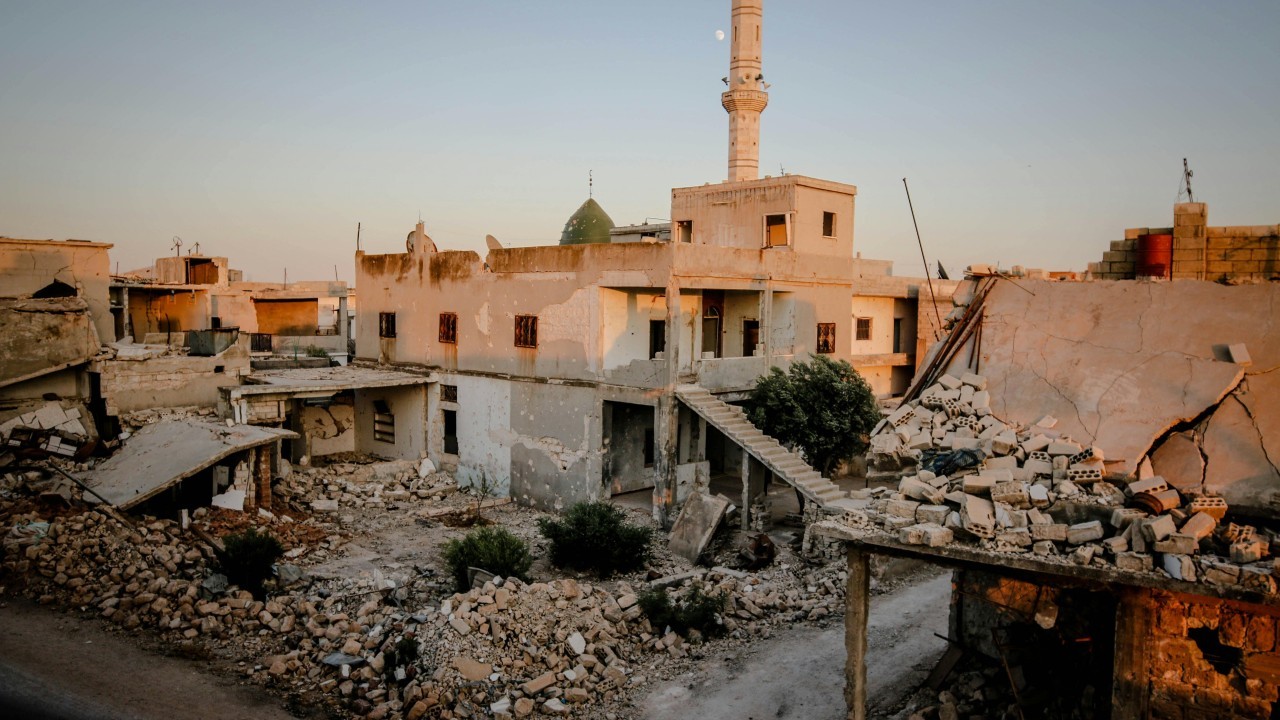
The world today faces an unprecedented convergence of instability. The rising frequency of extreme climate events, intensifying geopolitical competition, persistent economic disruption, aging infrastructure, and the supply-demand imbalances driven by rapid urbanization — these forces have combined to create a deeply vulnerable backdrop. Among them, regional armed conflict stands as the most extreme form of instability and cannot be ignored: since the early 21st century, the number of global conflicts has trended upward, with water infrastructure suffering severe damage in multiple regions. But threats never come in just one form, and resilience cannot be designed for a single scenario.
As a water solutions provider, we understand that the fragility of water infrastructure is amplified exponentially in times of instability. Whether it’s sudden supply disruption caused by natural disasters, operational paralysis triggered by political turmoil, or deliberate destruction of infrastructure in armed conflict — once water shifts from an everyday resource to a scarce commodity, what is at stake is not just survival, but the very foundations of social order.
Building Resilience Through Design: The Decisive Factors
The vulnerabilities of most water systems are rarely first revealed when a crisis erupts — they are embedded long before, at the design stage. Whether facing natural disasters, infrastructure decay, or more extreme deliberate sabotage, these structural weaknesses are rapidly exposed. We must therefore address the root causes, with the goal of managing diverse and compounding risks.
01| Decentralized Architecture
In the early stages of urban water infrastructure development, centralized network systems are typically chosen for their lower hardware and operational costs. In practice, however, these highly concentrated single-point systems are inherently fragile — whether struck by extreme weather, equipment failure, cyberattack, or deliberate sabotage, the result can be millions of residents without water.
A more resilient alternative: distributed water sources such as small-scale stations or modular treatment facilities, or community-level independent supply units.
Ukraine (Armed Conflict Scenario): Following systematic destruction of water infrastructure, an estimated one-third of the country’s freshwater production capacity was lost. With no decentralized backup systems in place, millions of residents became dependent on emergency supply units rushed in by international aid organizations. The lesson is clear: centralized systems leave almost no margin for error under extreme shocks.
02 | Multi-Source Redundancy
No water supply system should depend on a single source or a single treatment pathway. While specific redundancy strategies vary by region, the core principle is consistent: when the primary source fails, backup pathways must switch automatically and maintain basic supply without manual intervention.
Kuwait (Single-Source Dependency Scenario): Industry estimates suggest approximately 90% of the country’s water supply relies on desalination, with strategic reserves sufficient for only about one week. The system is highly efficient — but when faced with energy supply disruption, a political blockade, or extreme weather causing facility shutdown, it has almost no buffer. Efficiency and low resilience coexist in a textbook contradiction.
03 | Digital Twin + IoT Monitoring
In highly unstable environments, information is often scarcer than water itself. Digital twin systems can model potential failure pathways before faults occur; IoT metering technology can pinpoint failure locations rapidly; and AI-driven smart dispatch can optimize resource allocation even when networks are partially damaged. The core value lies not in the technology itself, but in the speed of decision-making it enables — in a crisis, every hour of delay can cost lives.
Goldcard Water Solutions: Integrated Water Management Platform
Conclusion
The challenges facing water resilience are never one-dimensional. Climate disruption, population growth, and accelerating urbanization are pushing water resources toward their structural limits. Simultaneously, geopolitical tensions, regional armed conflicts, economic sanctions, and supply chain fractures can trigger water supply crises at any moment. And aging infrastructure combined with cybersecurity threats plant hidden time bombs within the system itself. These variables reinforce one another, making the construction of water resilience a complex and urgent systems challenge. The ultimate purpose of water treatment solutions remains constant: to safeguard the foundation of human life and the stability of social order.
From advancing distributed decentralized architecture, to building multi-source redundancy, to deploying end-to-end intelligent monitoring — every technological iteration serves the same vision: a more agile, resilient, and sustainable future for water. This is not only the solution to today’s crises, but the strategic redundancy needed to face tomorrow’s unknowns.
As providers and guardians of water treatment solutions, we share with everyone a desire for stability and peace. We believe that water is the thread of life — regardless of the form instability takes in this world, water must never become a casualty of crisis, nor a tool of geopolitical leverage.
We do not wish to see instability define the character of this era, nor to find ourselves once again playing the role of last-resort lifeline in the face of recurring crises. Our shared hope is that water remains pure — and that the world finds its way toward stability.
The infrastructure decisions made today will determine who survives the conflicts of tomorrow. Resilience is not a luxury — it is a responsibility.
-
No. 161, Yuancheng Road, Qiantang District, Hangzhou, Zhejiang Province
Gas Solutions
Water Solutions
Process Measurement
Resources
About Goldcard
Copyright © 2025 Goldcard Smart Group Co., Ltd. All Rights Reserved