

Why Is Smart Water Management Becoming Critical to Climate Resilience?
In the summer of 2026, extreme heat has once again swept across large parts of the world.
Several European countries have issued consecutive heat warnings, with temperatures exceeding 40°C in some regions. Prolonged heatwaves have also affected North America, the Middle East, and many parts of Asia. As temperatures continue to rise, reservoirs shrink, drought conditions intensify, and pressure on urban water supplies increases, water security has once again become a global priority.
According to reports from the World Meteorological Organization (WMO) and the United Nations, climate change is accelerating disruptions to the global water cycle. Extreme weather events are becoming more frequent and severe, droughts are lasting longer, while population growth, industrial expansion, and agricultural irrigation continue to increase global water demand.
For the water industry, a new consensus is emerging:
The challenge is no longer simply finding new water sources—it is making better use of every drop of water already available.
Climate Change Is Reshaping Urban Water Management
The impact of extreme heat extends far beyond rising temperatures.
Higher temperatures lead to:
- Increased evaporation from reservoirs and rivers
- Reduced groundwater recharge
- Growing urban water demand
- Greater pressure on water distribution networks
- Higher energy consumption and operating costs for utilities
At the same time, more regions around the world are experiencing structural water scarcity.
The United Nations University (UNU) recently introduced the concept of “Water Bankruptcy,” highlighting that in many river basins and aquifers, water is being extracted faster than nature can replenish it. If this trend continues, seasonal shortages could evolve into long-term water crises.
As a result, improving water-use efficiency and minimizing water loss have become critical priorities for utilities worldwide.
The Overlooked “New Water Source”: Non-Revenue Water (NRW)
For many water utilities, the most accessible new source of water is not a new reservoir or desalination plant.
It is the water that has already been produced—but never reaches customers.
This is known as Non-Revenue Water (NRW).
NRW typically consists of:
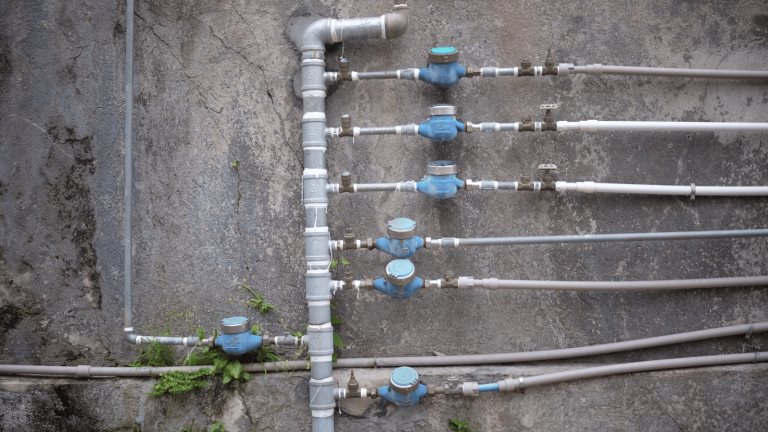
- Leakage from distribution networks
- Metering inaccuracies
- Unauthorized consumption
- Missing or incomplete consumption data
- Operational inefficiencies in network management
According to the World Bank, developing countries lose approximately 45 million cubic meters of water every day due to NRW, resulting in more than US$3 billion in economic losses annually.
More importantly, every cubic meter of lost water also represents wasted energy, chemicals, labor, and treatment costs invested in abstraction, purification, pumping, and distribution. These losses also contribute to unnecessary carbon emissions.
As utilities worldwide pursue decarbonization and sustainable development, reducing NRW has evolved from a key operational KPI into an essential strategy for conserving water, lowering emissions, and improving urban resilience.
Digitalization Is Transforming Water Management
Traditionally, water utilities relied heavily on manual inspections, scheduled meter reading, and reactive maintenance.
Today, digital technologies are enabling a shift from reactive response to predictive management.
Modern smart water solutions allow utilities to:
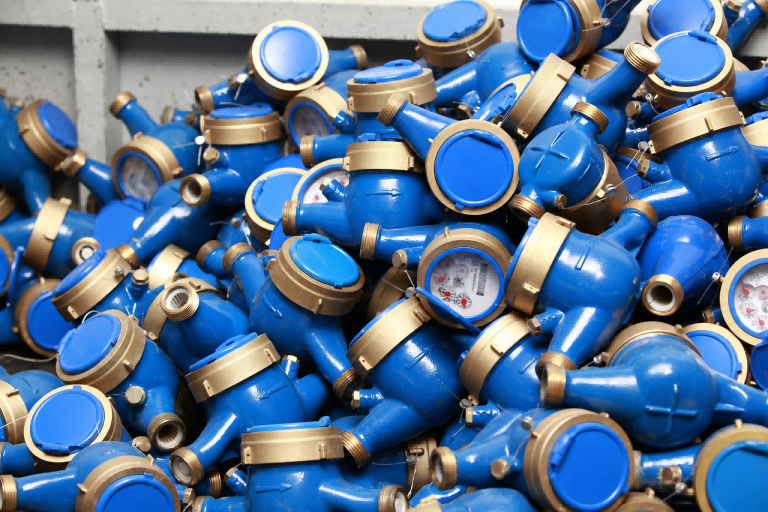
- Collect real-time consumption data through smart water meters
- Improve operational efficiency with Advanced Metering Infrastructure (AMI)
- Perform precise leakage analysis using District Metered Areas (DMA)
- Continuously monitor pressure and flow conditions
- Detect leakage risks early using AI-powered analytics
- Enable lifecycle data management through IoT wireless communications
- Support data-driven operational decisions with Meter Data Management Systems (MDMS)
These technologies not only help utilities detect leaks faster, but also optimize network performance, improve asset utilization, reduce maintenance costs, and enhance customer service.
Digitalization is rapidly becoming essential infrastructure for helping the global water sector adapt to climate change.
Reducing NRW Is Essentially Creating New Water Resources
For decades, the focus has largely been on developing new water supplies.
In the future, however, using existing resources more efficiently may prove even more valuable.
For water-stressed regions, every 1% reduction in NRW can deliver:
- Greater available water supply capacity
- Reduced investment in new treatment plants and infrastructure
- Lower energy consumption
- Reduced carbon emissions
- Stronger urban water resilience
In other words, reducing water loss is equivalent to creating a new source of water.
This is why an increasing number of countries are making smart water infrastructure, intelligent metering, leakage management, and digital operations integral components of their national water security strategies.
Looking Ahead: Maximizing the Value of Every Drop
While we cannot control the climate, we can transform the way water is managed.
From intelligent metering and wireless communications to leakage monitoring, AI-powered analytics, data-driven operations, and integrated smart water platforms, digital technologies are enabling utilities to manage water resources with greater precision, efficiency, and sustainability.
At Goldcard Water Solutions, we are committed to helping utilities worldwide reduce Non-Revenue Water, improve operational efficiency, and strengthen urban water resilience through smart water meters, wireless communication technologies, AMI systems, and comprehensive smart water solutions.
Looking ahead, the competition for water resources will no longer be defined solely by how much water is available—but by how effectively every drop is managed.
Reducing Non-Revenue Water is not simply about minimizing losses. It is about creating new water resources, strengthening water security, and contributing to a more sustainable future.
-
No. 161, Yuancheng Road, Qiantang District, Hangzhou, Zhejiang Province
Gas Solutions
Water Solutions
Process Measurement
Resources
About Goldcard
Copyright © 2025 Goldcard Smart Group Co., Ltd. All Rights Reserved